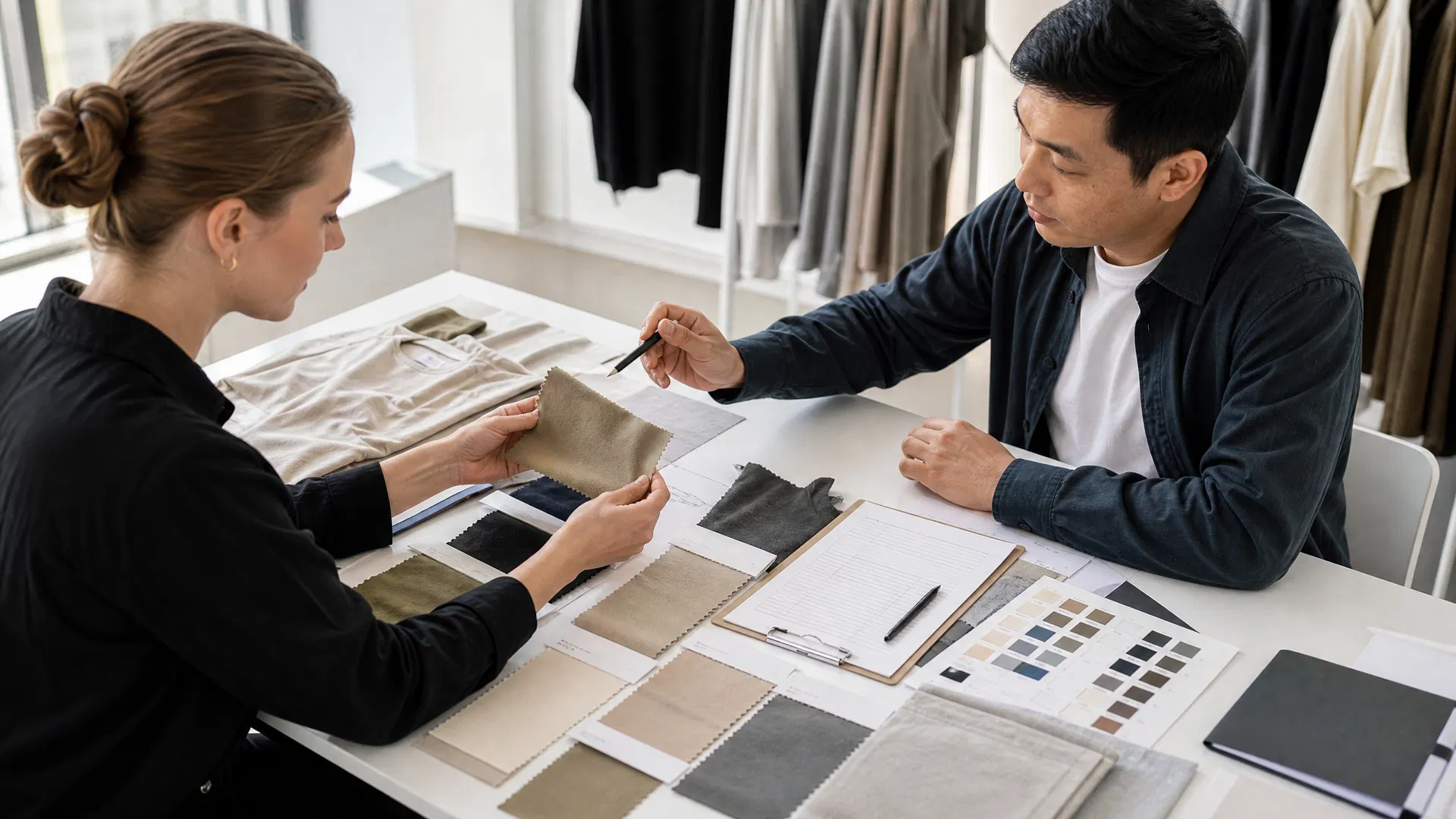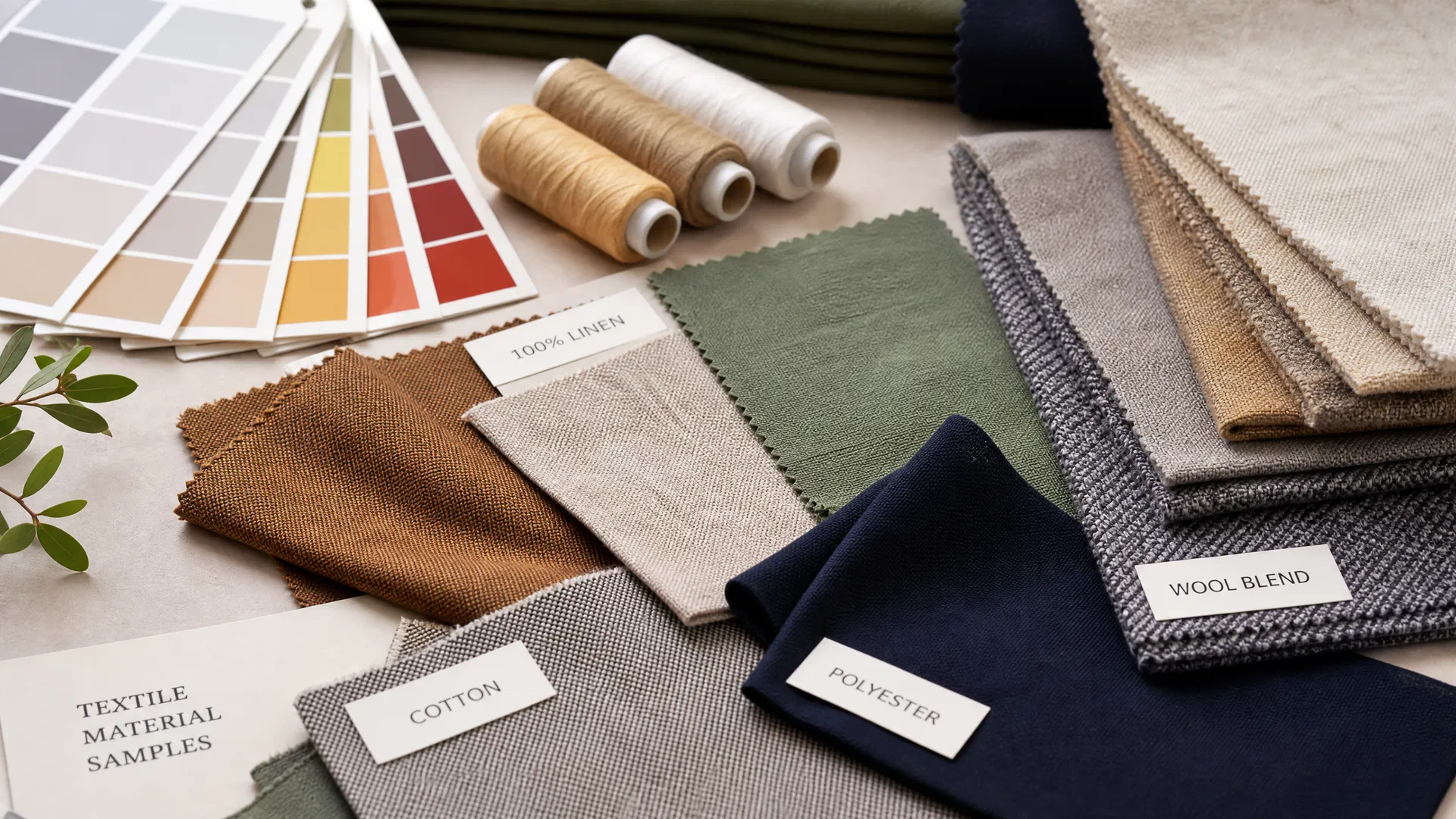
Les vêtements en marque blanche (private label) sont devenus l'une des stratégies les plus efficaces pour les entrepreneurs de la mode et les marques établies. En vous associant à une usine OEM pour produire des vêtements sous votre propre identité de marque, vous obtenez un contrôle total sur le design, la qualité et la tarification — sans l'investissement en capital lié à la possession d'une unité de production. En 2026, le modèle de la marque blanche est plus accessible que jamais, les usines acceptant des MOQ plus faibles et offrant des services de bout en bout allant de l'approvisionnement en tissus à l'emballage personnalisé.
Ce guide explique chaque étape du processus de fabrication en marque blanche, du concept initial jusqu'à l'inventaire prêt à être lancé.
Marque blanche (Private Label) vs White Label vs OEM vs ODM : Clarification des termes
Ces quatre termes sont souvent utilisés de manière interchangeable, mais ils décrivent des relations de fabrication distinctes :
| Modèle | Qui conçoit | À qui appartient le design | Branding |
|---|---|---|---|
| White Label | Usine | Usine | Votre marque sur le design de l'usine |
| Private Label (Marque blanche) | Marque (avec le soutien de l'usine) | Marque | Votre marque, votre design |
| OEM | Marque | Marque | Votre marque, vos spécifications |
| ODM | Usine (à partir du brief de la marque) | Partagé ou marque | Votre marque sur un design développé par l'usine |
Pour la plupart des startups de mode, la marque blanche (private label) et l'ODM constituent les points d'entrée les plus pratiques. Le white label nécessite un investissement minimal mais n'offre aucune différenciation. L'OEM exige un tech pack complet, ce qui demande davantage de capacités de conception en amont.
Avantages pour les startups de mode et les marques DTC
Le modèle de la marque blanche offre plusieurs avantages structurels par rapport à l'achat en gros (wholesale) ou à la revente de marques existantes :
- Contrôle des marges : Acheter au coût de fabrication et vendre au prix de détail génère généralement des marges brutes de 60 à 80 %, contre 30 à 40 % pour la revente en gros.
- Différenciation de la marque : Vos produits sont exclusifs à votre marque, ce qui évite toute comparaison directe de prix avec des concurrents vendant des articles identiques.
- Contrôle de la qualité : Vous définissez les spécifications, vous contrôlez donc le résultat — poids du tissu, construction, coupe et finitions.
- Évolutivité : Une fois votre relation de production établie, le réapprovisionnement et la mise à l'échelle se font en toute simplicité.
Le processus étape par étape de la marque blanche
1. Développement du design
Commencez par un brief de design clair : silhouette, catégorie de tissu, prix cible et détails de construction clés. Si vous possédez de solides compétences en design, vous pouvez créer vous-même les croquis techniques. Sinon, un modéliste indépendant ou l'équipe ODM de votre usine OEM peut développer des designs à partir de mood boards ou d'images de référence. Pour vous guider dans la préparation de vos fichiers de conception pour la production, consultez notre guide du tech pack.
2. Préparation du Tech Pack
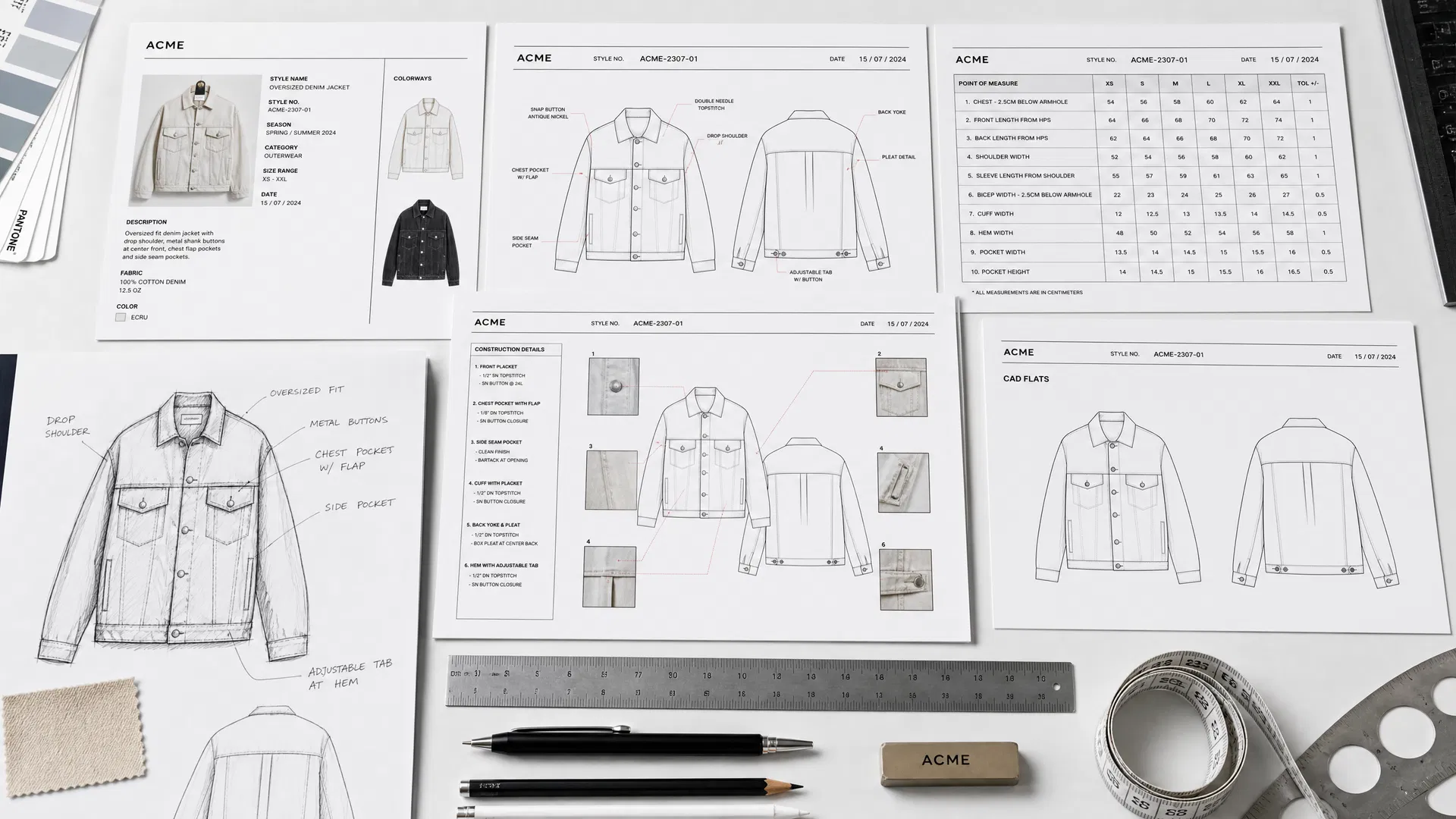
Un tech pack (dossier technique) est le plan technique de votre vêtement — le document que votre usine utilise pour produire des échantillons et des commandes en gros. Il comprend des croquis à plat, un tableau de mesures, une nomenclature (BOM), des notes de construction et des spécifications de coloris. Un tech pack complet et précis est le facteur le plus important pour obtenir un premier échantillon correct.
3. Échantillonnage (Sampling)
Une fois votre tech pack soumis, l'usine produit un premier échantillon (Proto Sample) en 5 à 7 jours. Examinez-le attentivement par rapport à votre feuille de spécifications, fournissez des notes de révision détaillées et approuvez un échantillon final prêt pour la production (PP Sample) avant d'autoriser la production en série. Prévoyez 2 à 3 rounds de révisions.
4. Production en série (Bulk Production)
Après l'approbation de l'échantillon PP, la production en série commence. Les délais pour les vêtements standard sont de 15 à 25 jours à compter du début de la production. Les vêtements plus complexes — costumes sur mesure, vêtements d'extérieur structurés — peuvent nécessiter 25 à 35 jours. Confirmez le calendrier de production par écrit et demandez des photos de contrôle qualité en cours de fabrication (in-line QC) au milieu de la production.
5. Branding et étiquetage
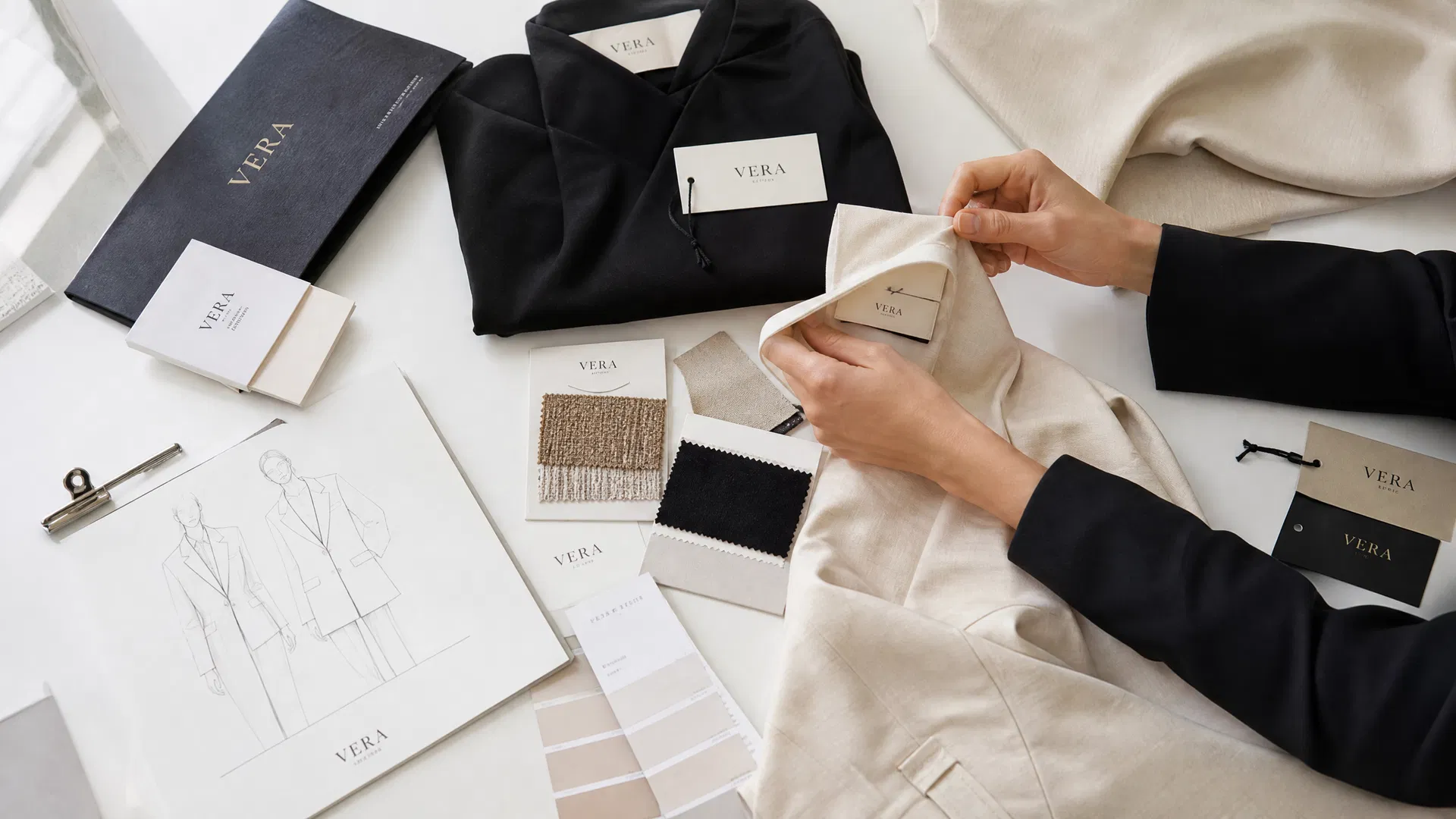
Votre identité de marque blanche s'exprime à travers de multiples points de contact sur le vêtement fini. Chacun nécessite une préparation et un délai d'exécution en amont.
Exigences en matière d'étiquettes et de hangtags
Pour les vêtements vendus aux États-Unis et dans l'UE, les étiquettes suivantes sont exigées par la loi ou fortement recommandées :
| Type d'étiquette | Contenu requis | Réglementation |
|---|---|---|
| Étiquette d'entretien (Care Label) | Symboles de lavage, de séchage, de repassage, de blanchiment et de nettoyage à sec | USA : FTC ; UE : EN ISO 3758 |
| Composition des fibres (Fiber Content Label) | Pourcentage de chaque fibre en poids | USA : Textile Fiber Products Identification Act |
| Pays d'origine (Country of Origin) | "Made in China" ou équivalent | Douanes américaines ; Règlement UE 1007/2011 |
| Étiquette de taille (Size Label) | Désignation de la taille (S/M/L ou numérique) | Standard de la marque |
| Étiquette de marque (Brand Label) | Nom de la marque / logo | Standard de la marque |
Les étiquettes sont généralement tissées (pour les étiquettes de marque principales), imprimées (pour les étiquettes d'entretien/composition) ou thermocollées. Votre usine peut approvisionner et produire tous les types d'étiquettes — fournissez vos visuels de marque au format vectoriel (AI ou EPS) et vos spécifications d'étiquettes au moins 2 semaines avant le début de la production.
Options d'emballage (Packaging)
L'emballage est un point de contact de marque important, en particulier pour les marques DTC qui expédient directement aux consommateurs. Les options standard comprennent :
- Sacs en polyéthylène (Poly bags) : Protection standard des vêtements pour le gros et le détail. Peuvent être imprimés avec le logo de votre marque.
- Hangtags (Étiquettes volantes) : Fixées au vêtement avec une épingle ou une ficelle, communiquant l'histoire de la marque, le prix et les instructions d'entretien.
- Boîtes d'expédition personnalisées (Mailer boxes) : Pour les envois DTC, une boîte aux couleurs de la marque rehausse considérablement l'expérience de déballage. Nécessite 3 à 4 semaines de délai pour l'impression personnalisée.
- Papier de soie et ruban : Des ajouts peu coûteux qui renforcent le positionnement de marque haut de gamme.
Structure typique des coûts
Le coût unitaire varie considérablement en fonction de la complexité du vêtement et du volume de commande. Les fourchettes suivantes sont indicatives pour la production OEM basée à Shenzhen :
| Type de vêtement | Coût unitaire FOB (100–300 pcs) | Coût unitaire FOB (500+ pcs) |
|---|---|---|
| T-shirt basique | $4–8 | $3–6 |
| Robe (tissé) | $12–25 | $9–18 |
| Blazer / Veste de costume | $35–65 | $25–50 |
| Knitwear (pull / tricot) | $15–30 | $12–22 |
| Vêtement d'extérieur / Manteau | $45–90 | $35–70 |
Il s'agit de prix FOB (Free on Board) — ils n'incluent pas le transport, les droits d'importation ni les frais de distribution locale. Pour les importations américaines en provenance de Chine, les taux de droits de douane varient selon le code SH ; consultez un déclarant en douane pour des calculs précis.
Quantités minimales de commande (MOQ) et négociation
La plupart des usines de Shenzhen acceptent des MOQ de 50 à 200 pièces par style pour les commandes en marque blanche. Pour négocier des MOQ plus bas, envisagez de consolider votre commande sur plusieurs styles auprès de la même usine, de vous engager sur un calendrier de réapprovisionnement ou d'accepter un prix unitaire légèrement plus élevé pour la première commande. Les usines sont généralement disposées à accepter des MOQ plus faibles pour les nouveaux clients qui font preuve d'un sérieux manifeste et d'une préparation professionnelle (c'est-à-dire un tech pack complet et un brief de marque clair).
Considérations juridiques
Avant de lancer une marque en marque blanche, veillez à respecter les exigences légales suivantes :
- Enregistrement de marque : Enregistrez votre nom de marque et votre logo sur vos marchés cibles avant le début de la production. Le processus de demande de marque aux États-Unis prend 8 à 12 mois ; l'enregistrement dans l'UE prend 4 à 6 mois.
- Conformité REACH (UE) : Les vêtements vendus dans l'UE doivent respecter les réglementations REACH limitant les substances dangereuses. Demandez un rapport de test REACH à votre usine ou organisez des tests par un tiers.
- CPSIA (États-Unis, vêtements pour enfants) : Les vêtements pour enfants vendus aux États-Unis doivent être conformes à la loi sur la sécurité des produits de consommation (Consumer Product Safety Improvement Act), qui exige des tests de plomb et de phtalates.
- Règles textiles de la FTC (États-Unis) : La composition des fibres et l'étiquetage d'entretien sont exigés par la loi pour les vêtements vendus aux États-Unis.
Calendrier de lancement : Du concept à la livraison
Un calendrier réaliste pour une première commande en marque blanche, en supposant un tech pack complet au départ :
| Étape | Durée | Cumul |
|---|---|---|
| Préparation du tech pack | 1–2 semaines | Semaine 2 |
| Premier échantillon | 5–7 jours | Semaine 3 |
| Révisions de l'échantillon (2 rounds) | 2 semaines | Semaine 5 |
| Approbation de l'échantillon PP | 3–5 jours | Semaine 6 |
| Production en série | 15–25 jours | Semaine 9–10 |
| Inspection QC | 1–2 jours | Semaine 10 |
| Expédition (fret aérien, USA) | 5–7 jours | Semaine 11 |
Prévoyez un minimum de 10 à 12 semaines entre la soumission du tech pack et la réception en entrepôt pour une première commande. Les marques expérimentées ayant des relations établies avec les usines peuvent réduire ce délai à 8–10 semaines.
Lancez votre marque blanche avec Chanddo
Chanddo Apparel est spécialisé dans la production en marque blanche et OEM/ODM pour les marques américaines, européennes et australiennes. Nous proposons des MOQ à partir de 50 pièces par style, un échantillonnage en 5 à 7 jours et un support de branding complet comprenant des étiquettes tissées, des hangtags et des emballages personnalisés. Notre usine de Shenzhen produit dans 8 catégories de vêtements — des costumes sur mesure aux tricots.
Contactez-nous pour un devis gratuit et parlez-nous de votre projet. Nous répondons dans les 24 heures, du lundi au samedi.