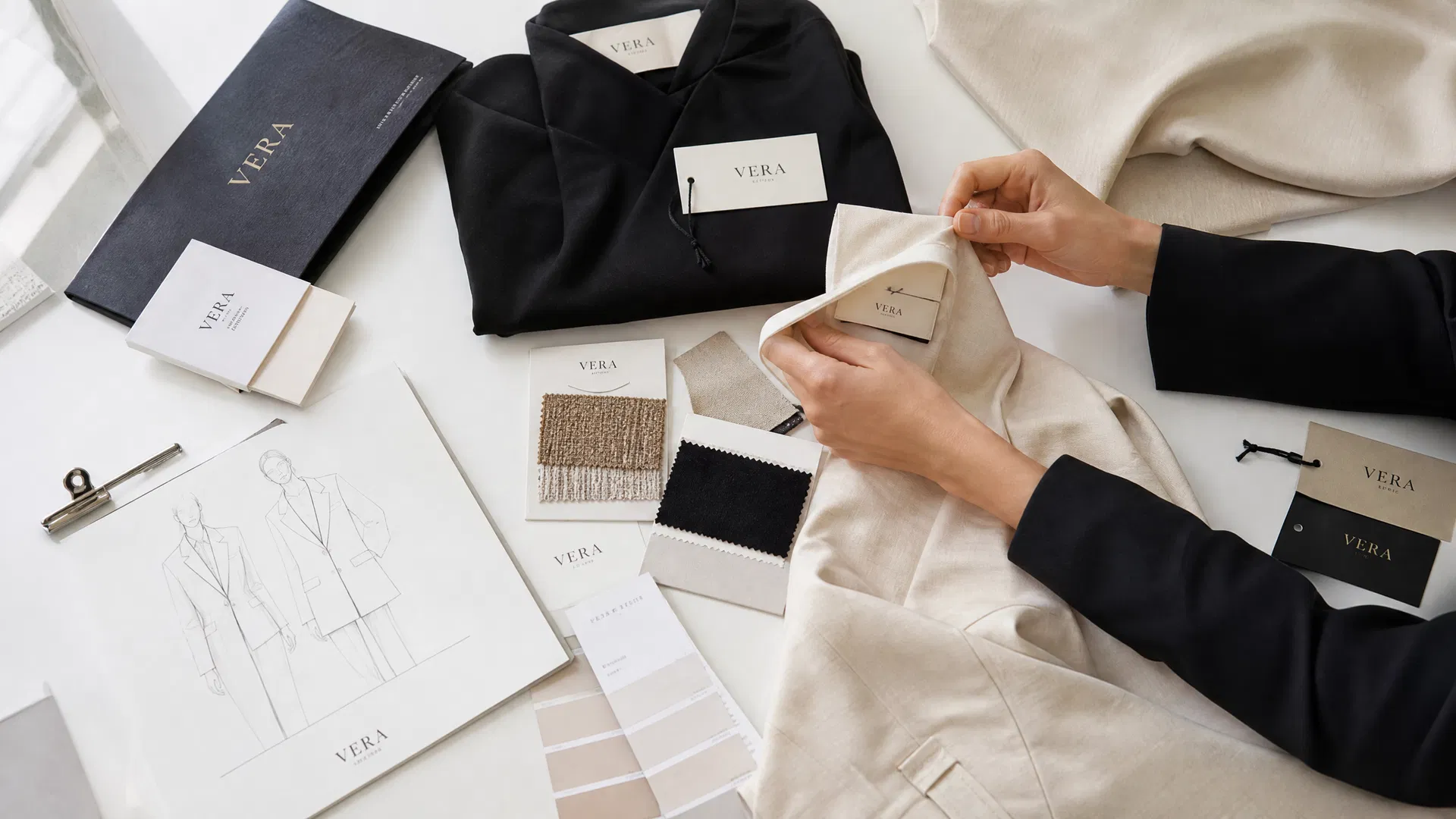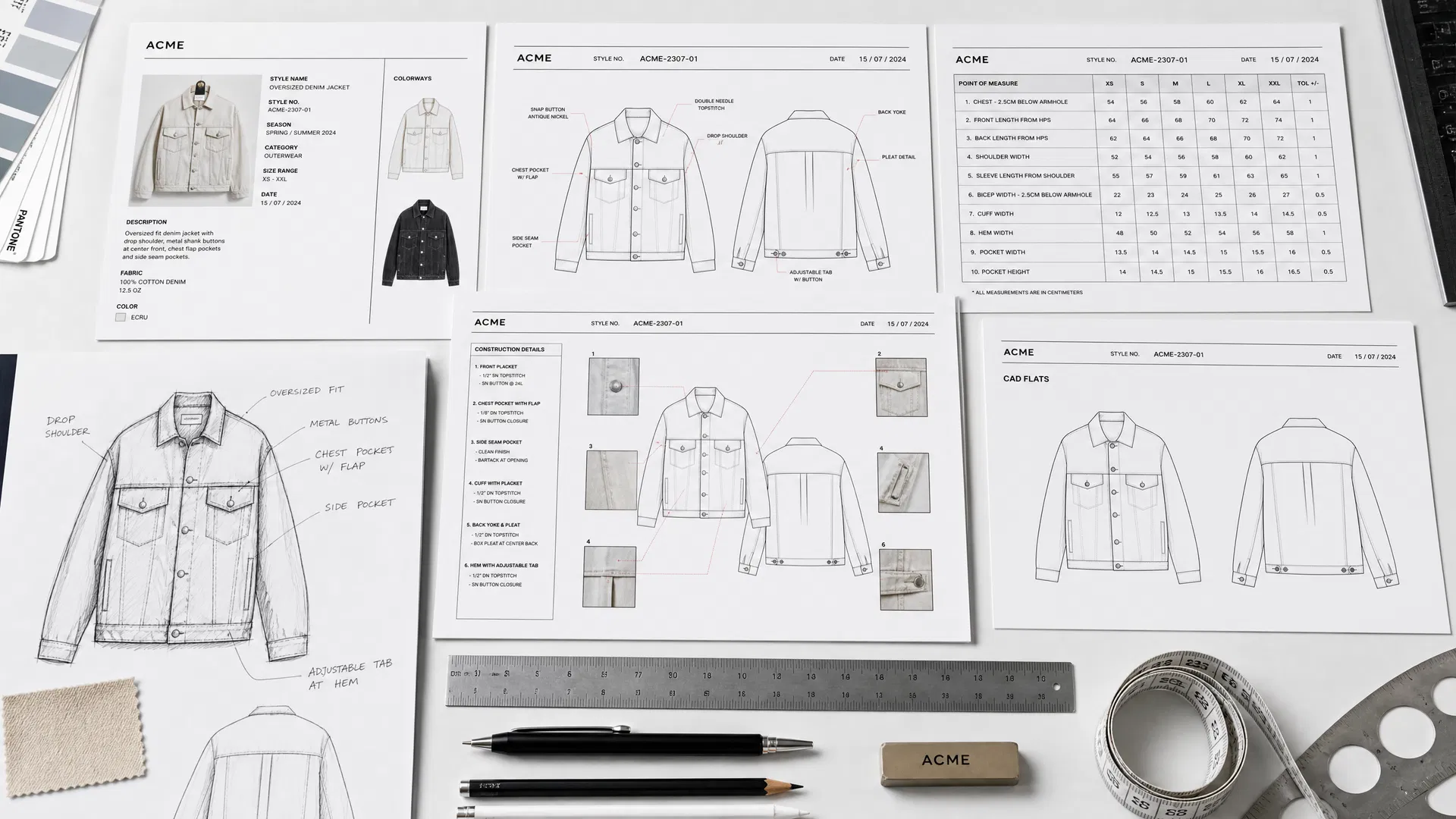
Un tech pack — abréviation de dossier technique (technical package) — est le document complet qui communique le design de votre vêtement à une usine. C'est de loin le document le plus important dans le processus de production OEM. Un tech pack complet et précis fait toute la différence entre un premier échantillon correct et de multiples séries de révisions coûteuses. Il élimine toute ambiguïté, réduit les malentendus et crée un point de référence documenté pour le contrôle de la qualité tout au long de la production.
Ce guide couvre chaque composant d'un tech pack professionnel, la manière de formater chaque section et les erreurs les plus courantes qui conduisent à des échantillons incorrects et à des erreurs de production.
Qu'est-ce qu'un Tech Pack et pourquoi chaque commande en a besoin
Un tech pack est le plan technique d'un vêtement — le document qui indique précisément à une usine comment construire votre design. Il comprend tout, de la forme de la silhouette à la couleur de fil spécifique utilisée pour les surpiqûres. Sans un tech pack complet, une usine est contrainte de faire des suppositions sur vos intentions de design, et ces suppositions sont souvent erronées.
Les conséquences d'un tech pack incomplet sont prévisibles : des proportions incorrectes, un mauvais tissu, des détails de construction manquants et des écarts de mesure qui nécessitent de multiples révisions d'échantillons. Chaque cycle de révision ajoute 5 à 7 jours et des coûts d'échantillonnage à votre calendrier. Un tech pack bien préparé donne généralement un premier échantillon correct en 7 jours — un tech pack incomplet peut prolonger le processus d'échantillonnage de 4 à 6 semaines.
Même si vous travaillez avec une usine qui propose des services ODM (où l'usine développe le design à partir de votre brief), fournir un tech pack détaillé pour votre échantillon approuvé garantit que la production en gros reproduit exactement le prototype validé.
Composants essentiels d'un Tech Pack
Un tech pack complet pour un vêtement tissé (robe, chemise, pantalon) doit inclure les sections suivantes :
| Section | Contenu | Format |
|---|---|---|
| Page de couverture | Nom de la marque, nom/numéro du modèle, saison, date, numéro de révision | En-tête PDF |
| Croquis technique | Vues de face, de dos, de profil ; détails agrandis | Vecteur (AI/EPS) ou dessin au trait net |
| Tableau des mesures | Toutes les mesures clés par taille ; tolérance ± | Tableau (cm ou pouces) |
| Nomenclature (BOM - Bill of Materials) | Tous les matériaux avec leurs spécifications | Tableau |
| Détails de construction | Type de point, allocation de couture, largeur d'ourlet, détails de fermeture | Croquis annotés + texte |
| Coloris (Colorways) | Noms des couleurs, références Pantone, échantillons de tissu | Pastilles de couleur + codes Pantone |
| Étiquettes et emballage | Emplacement des étiquettes, instructions d'entretien, spécifications des étiquettes volantes (hang tags) | Schémas + texte |
| Commentaires sur la coupe (Fit) | Notes sur la coupe voulue (ajustée, décontractée, oversize) | Texte + images de référence |
Croquis techniques : Vues de face, de dos, de profil et de détail
Les croquis techniques (également appelés « flats » ou « croquis à plat ») constituent la base visuelle de votre tech pack. Contrairement à l'illustration de mode, les croquis techniques sont dessinés à des proportions exactes sur une silhouette plate et symétrique, montrant le vêtement tel qu'il apparaîtrait posé à plat sur une table. Ils doivent être nets, précis et sans ambiguïté.
Chaque tech pack doit inclure :
- Vue de face : Face avant complète du vêtement, montrant tous les détails de construction visibles (coutures, poches, boutons, surpiqûres)
- Vue de dos : Dos complet, montrant les coutures dorsales, les fermetures et les détails du dos
- Vue de profil : Particulièrement importante pour les vêtements présentant des découpes de côté prononcées ou des poches
- Vues de détail : Dessins agrandis de détails de construction complexes — construction du col, emplacement des poches, design des poignets, type de fermeture éclair
Les croquis doivent être créés dans Adobe Illustrator ou un programme vectoriel similaire pour un rendu net et évolutif. Si vous ne pouvez pas produire de croquis vectoriels, un dessin à la main net photographié sous un bon éclairage est acceptable — mais le format vectoriel est fortement privilégié par les usines.
Tableau des mesures : Point de mesure et tolérance
Le tableau des mesures est la section la plus critique sur le plan technique de votre tech pack. Il spécifie les dimensions exactes de chaque point de mesure clé du vêtement, pour chaque taille de votre grille de tailles.
Les points de mesure clés pour une robe, par exemple, comprennent : la largeur de poitrine, la largeur de taille, la largeur de hanches, la largeur d'épaule, la longueur devant, la longueur dos, la longueur de manche, la profondeur d'emmanchure et la circonférence de l'ourlet. Chaque mesure est prise à un « point de mesure » (POM - Point of Measure) spécifique — un emplacement défini sur le vêtement — afin de garantir la cohérence entre la mesure de l'usine et la vôtre.
Chaque mesure doit inclure une tolérance (±) — l'écart acceptable par rapport aux spécifications. Tolérances typiques pour les vêtements tissés :
| Type de mesure | Tolérance typique |
|---|---|
| Poitrine / Taille / Hanches (circonférence) | ± 1,5 cm |
| Longueur (devant / dos / manche) | ± 1,0 cm |
| Largeur d'épaule | ± 0,5 cm |
| Circonférence de l'ourlet | ± 2,0 cm |
Nomenclature (Bill of Materials - BOM)
La nomenclature (BOM) est une liste complète de tous les matériaux et composants utilisés dans le vêtement, avec des spécifications suffisantes pour que l'usine puisse s'approvisionner avec précision. Une nomenclature complète comprend :
- Tissu principal (Shell fabric) : Composition des fibres, structure armure/tricot, GSM (g/m²), largeur, couleur, exigences de certification éventuelles
- Tissu de doublure : Mêmes spécifications que le tissu principal
- Entoilage (Interlining) : Type (thermo-collant / à coudre), poids, emplacement
- Fil de couture : Couleur (référence Pantone ou marque de fil), poids, type de point
- Boutons : Taille (mm), matériau, couleur, nombre de trous, emplacement
- Fermetures éclair (Zippers) : Marque (YKK privilégié), type (invisible / spirale / métal), longueur, couleur
- Étiquettes : Type (tissées / imprimées / transfert thermique), contenu, emplacement
- Élastique : Largeur, pourcentage d'élasticité, emplacement
- Emballage : Taille du sachet polybag, spécifications des étiquettes volantes (hang tags), instructions de pliage
Pour les spécifications des tissus, consultez notre guide d'approvisionnement en tissus pour un aperçu complet des types de tissus, des poids et des normes de certification.
Coloris et références Pantone
La précision des couleurs est l'une des sources les plus fréquentes de litiges de production. Les descriptions de couleurs verbales (« bleu marine », « vieux rose ») sont subjectives et seront interprétées différemment selon les usines. Spécifiez toujours les couleurs à l'aide des références Pantone Textile Color System (TCX) — la norme industrielle pour la communication des couleurs dans l'habillement.
Pour chaque coloris, spécifiez :
- Le code Pantone TCX pour chaque tissu et composant
- L'écart de couleur acceptable (généralement ΔE ≤ 1,5 pour les couleurs standard)
- Si la couleur doit correspondre entre différents types de tissus (ex. le tissu principal et la doublure doivent s'accorder)
Si vous ne disposez pas de références Pantone TCX, fournissez des échantillons de tissu physiques ou des photos haute résolution sous un éclairage contrôlé. L'usine fera correspondre l'échantillon plutôt qu'une couleur d'écran.
Notes de construction (Construction Notes)
Les notes de construction précisent la manière dont le vêtement est assemblé — les détails techniques qui déterminent la qualité et la durabilité :
- Type de point : Point noué (301), point de chaînette (401), surjet (504), point de recouvrement (406) — spécifier par le numéro du type de point
- Densité de points : Points par pouce (SPI - Stitches per Inch) — généralement 10 à 12 SPI pour les vêtements tissés
- Allocation de couture (Marge de couture) : La norme est de 1,5 cm ; spécifier toute dérogation
- Largeur d'ourlet : À spécifier pour tous les types d'ourlets (ourlet du bas, ourlet de manche, parementure)
- Finition des coutures : Couture anglaise, couture rabattue, surjetée ou gansée
- Surpiqûres : Largeur, couleur du fil, type de point
Instructions d'étiquetage et d'emballage
L'emplacement des étiquettes doit être spécifié avec précision — une étiquette d'entretien cousue au mauvais endroit constitue un défaut de qualité. Pour chaque type d'étiquette, spécifiez :
- Le type d'étiquette et son contenu
- L'emplacement (ex. « milieu du dos du col, à 1 cm sous la couture du col »)
- La méthode de fixation (cousue, thermoscellée, étiquette volante avec épingle)
Les instructions d'emballage doivent préciser la méthode de pliage, la taille du sachet polybag, l'emplacement des étiquettes volantes et la configuration de l'emballage en carton (pièces par carton, dimensions du carton).
Erreurs courantes de Tech Pack à éviter
Les erreurs suivantes entraînent systématiquement des échantillons incorrects et des erreurs de production :
- Mesures manquantes : Omettre des points de mesure clés oblige l'usine à estimer, ce qui entraîne des problèmes de coupe
- Spécifications de tissu vagues : Indiquer « Tissu en coton » sans GSM, armure ni pourcentage de composition des fibres est insuffisant
- Absence de références Pantone : Les descriptions de couleurs sans codes Pantone conduisent à des litiges sur l'accord des couleurs
- Numéros de révision obsolètes : Envoyer une ancienne version du tech pack après des modifications est une cause fréquente d'erreurs de production
- Vues de détail manquantes : Les détails de construction complexes (col, poche, poignet) doivent être dessinés en détail — une seule vue de face est insuffisante
- Absence de spécifications de tolérance : Sans tolérances, l'usine n'a aucun repère concernant l'écart de mesure acceptable
Envoyez votre Tech Pack à Chanddo pour un devis gratuit
Chez Chanddo Apparel, notre équipe technique examine chaque soumission de tech pack dans les 24 heures et fournit un retour détaillé sur toute spécification manquante avant le début de l'échantillonnage. Nous acceptons les tech packs aux formats PDF, AI et DXF, et notre équipe ODM peut aider les marques qui ont besoin d'assistance pour développer une documentation technique à partir de concepts de design.
Soumettez votre tech pack pour un devis gratuit — ou lisez notre guide sur comment choisir un fabricant de vêtements OEM pour comprendre ce qu'il faut rechercher chez un partenaire de production avant de commencer.