Die Qualitätskontrolle ist das wichtigste Risikomanagement-Tool für Marken, die bei ausländischen Fabriken produzieren lassen. Ein systematischer QC-Prozess verhindert, dass fehlerhafte Kleidungsstücke Ihre Kunden erreichen, schützt Ihren Markenruf und schafft Verbindlichkeit in Ihrer Fertigungspartnerschaft. Dennoch verstehen viele Marken — insbesondere solche, die ihre ersten Auslandsbestellungen aufgeben — oft nicht vollständig, wie eine professionelle Bekleidungsprüfung funktioniert oder welche Standards sie von ihrer Fabrik fordern sollten.
Dieser Leitfaden erklärt den AQL-Prüfungsstandard, den von professionellen OEM-Fabriken verwendeten dreistufigen QC-Prozess, häufige Mängelkategorien und die Interpretation eines QC-Berichts.
Warum QC in der Bekleidungsherstellung wichtig ist
Die Folgen einer unzureichenden Qualitätskontrolle summieren sich schnell. Eine Fehlerquote von 3 % bei einer Bestellung von 1.000 Stück bedeutet, dass 30 fehlerhafte Kleidungsstücke Ihre Kunden erreichen. Jeder mangelhafte Artikel generiert eine Retoure, eine Kundendienstanfrage und potenziell negative Bewertungen. Für DTC-Marken können Retourenquoten von über 5 % ein Produkt selbst bei gesunden Bruttomargen unrentabel machen.
Über einzelne Fehler hinaus untergräbt eine inkonsistente Qualität über eine Produktionscharge hinweg — wie Farb-, Größen- oder Verarbeitungsabweichungen — das Markenvertrauen und erschwert das Bestandsmanagement. Professionelle QC-Prozesse adressieren sowohl einzelne Mängel als auch die Produktionskonsistenz.
AQL (Acceptable Quality Limit) erklärt
AQL (Acceptable Quality Limit) ist der internationale Standard für statistische Stichprobenprüfungen von hergestellten Gütern. In der Bekleidungsindustrie ist AQL 2.5 der am häufigsten verwendete Standard — er besagt, dass der maximal zulässige Prozentsatz fehlerhafter Einheiten in einer Charge 2,5 % beträgt.
Das AQL-System funktioniert, indem eine statistisch ermittelte Stichprobe von Einheiten aus der gesamten Produktionscharge geprüft wird, anstatt jedes Stück einzeln zu untersuchen. Die Stichprobengröße und die Annahme-/Ablehnungsschwellen sind in den Standards MIL-STD-1916 und ISO 2859-1 festgelegt. Für AQL 2.5 bei allgemeiner Prüfungsstufe II (dem Standard für die meisten Bekleidungsbestellungen):
| Losgröße (Stk.) | Stichprobengröße | Annahme (≤) | Ablehnung (≥) |
|---|---|---|---|
| 151–280 | 32 | 2 | 3 |
| 281–500 | 50 | 3 | 4 |
| 501–1.200 | 80 | 5 | 6 |
| 1.201–3.200 | 125 | 7 | 8 |
| 3.201–10.000 | 200 | 10 | 11 |
Bei einer Charge von 1.000 Stück werden 80 Kleidungsstücke geprüft. Werden 5 oder weniger Mängel gefunden, ist die Charge bestanden. Werden 6 oder mehr Mängel gefunden, schlägt die Charge fehl und erfordert eine 100-%-Prüfung oder Nacharbeit.
Drei Prüfungsstufen
Stufe 1: Rohmaterialprüfung
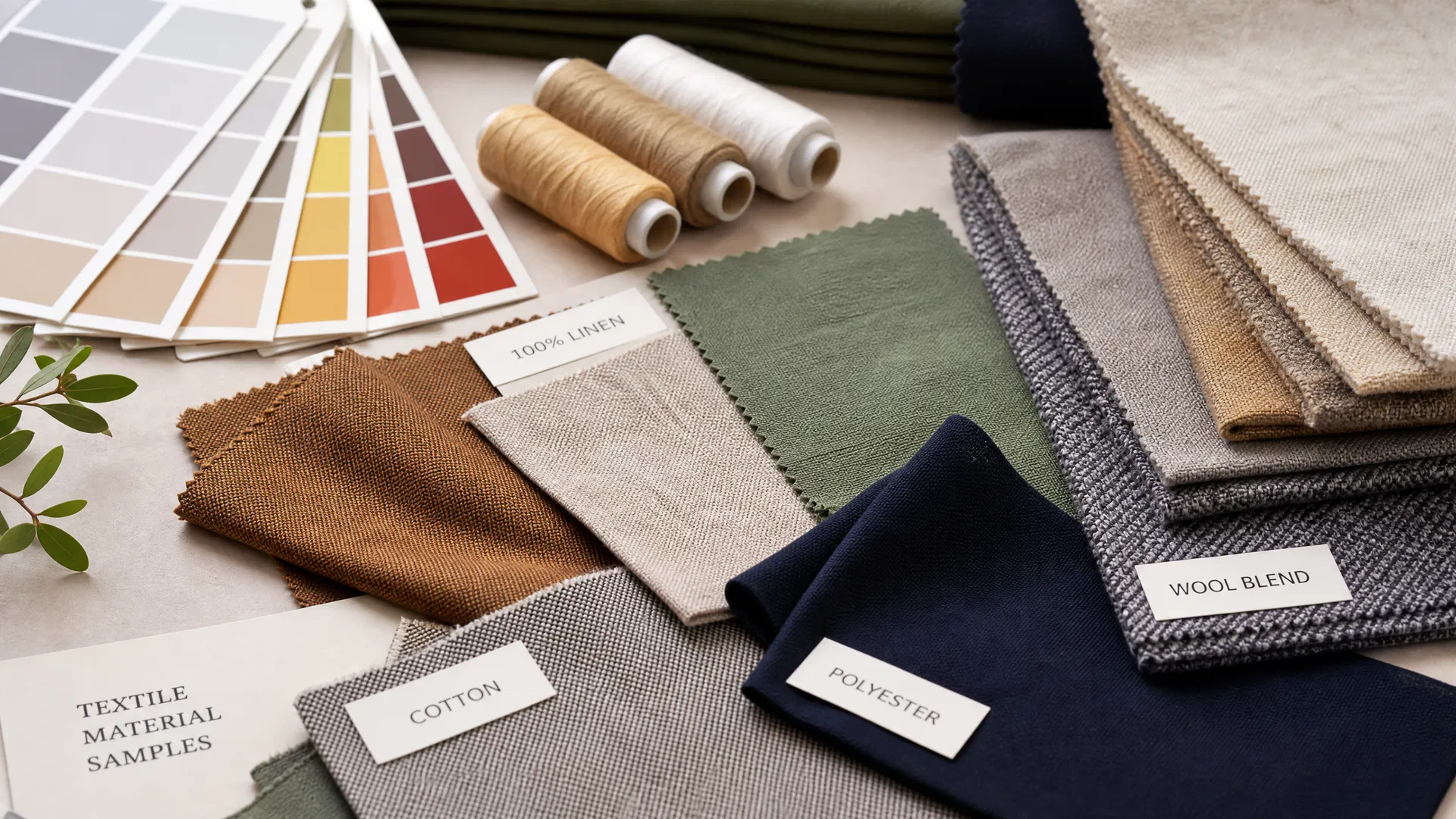
Bevor der Zuschnitt beginnt, werden Stoffe und Zubehör auf Mängel untersucht. Die Stoffprüfung prüft auf Webfehler, Farbkonsistenz, GSM, Breite und Einlaufverhalten. Die Zubehörprüfung umfasst Knöpfe, Reißverschlüsse, Etiketten und Einlagen. Das Erkennen von Stofffehlern vor dem Zuschnitt verhindert verschwendete Produktionszeit und Material.
Stufe 2: Begleitende Prüfung (während des Nähens)
Die begleitende Prüfung findet während des Nähprozesses statt, typischerweise an wichtigen Meilensteinen der Produktion: nach dem Zuschnitt, nach dem Zusammenbau von Hauptkomponenten und am Ende der Nählinie. Das Ziel ist es, systematische Fehler — wie falsche Fadenspannung, verschobene Nähte oder falsche Maße — zu erkennen und zu korrigieren, bevor sie die gesamte Produktionscharge betreffen. Ein während der Produktion entdeckter Fehler kostet nur einen Bruchteil dessen, was die Nacharbeit fertiger Kleidungsstücke kosten würde.
Stufe 3: Endgültige Vorversand-Inspektion (PSI)
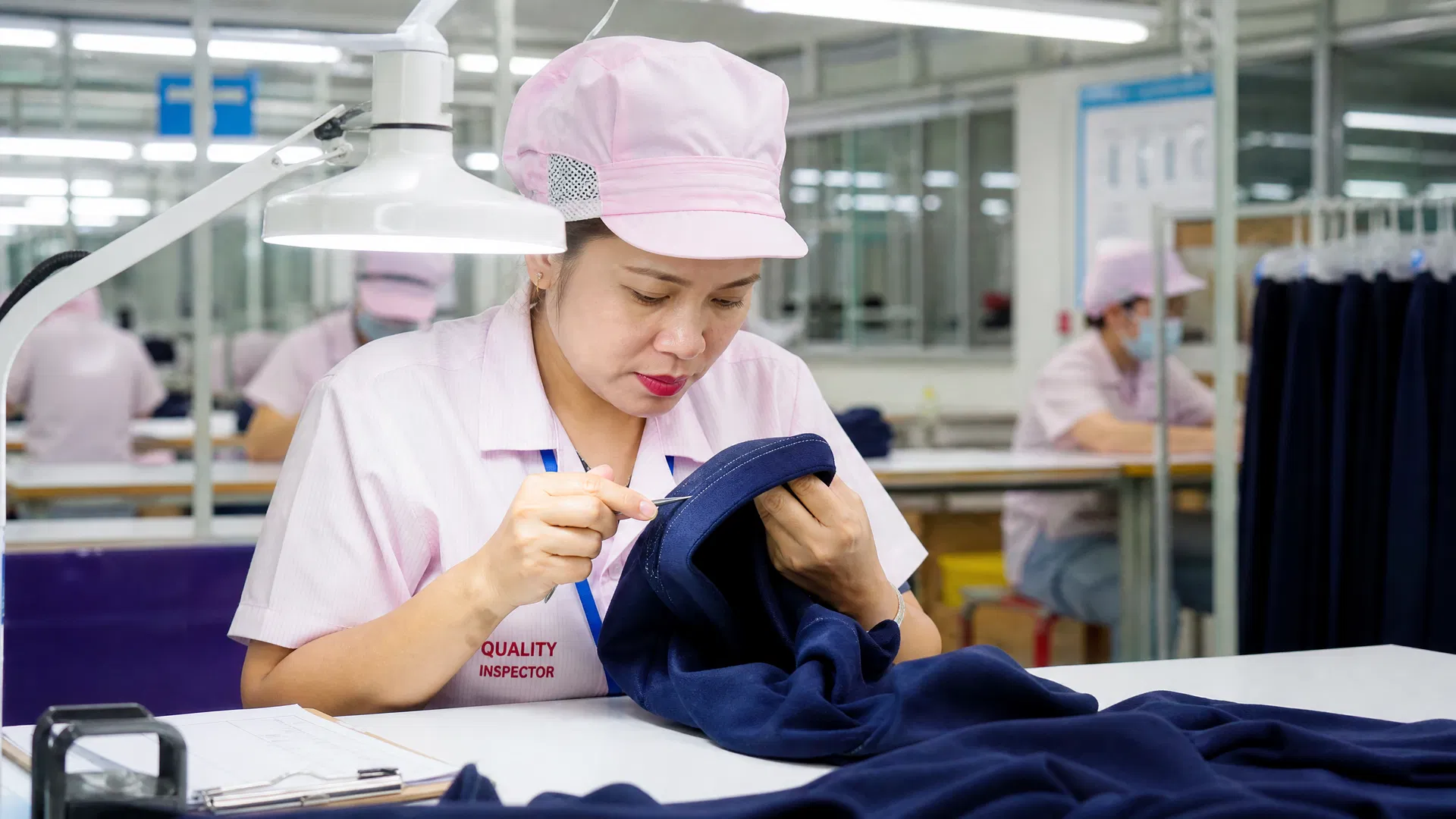
Die Endinspektion findet statt, nachdem 100 % der Bestellung komplett und verpackt sind, vor dem Versand. Dies ist die umfassendste Prüfungsstufe und die für Marken relevanteste. Der Inspektor wählt zufällig Kleidungsstücke aus verpackten Kartons aus (nicht von der Fabrik vorselektiert), prüft sie anhand des genehmigten PP-Musters und der Tech-Pack-Spezifikationen und stellt ein Bestanden- oder Nicht-bestanden-Ergebnis aus.
Häufige Mängelkategorien
Bekleidungsmängel werden in drei Schweregrade unterteilt, jeweils mit unterschiedlichen Annahmeschwellen:
| Mängelgrad | Definition | Beispiele | AQL-Toleranz |
|---|---|---|---|
| Kritisch | Sicherheitsrisiko oder Nichteinhaltung von Vorschriften | Scharfe Kanten, toxische Substanzen, fehlende vorgeschriebene Etiketten | Null Toleranz (AQL 0) |
| Hauptmangel (Major) | Führt wahrscheinlich zur Ablehnung oder Retoure durch den Kunden | Gerissene Naht, falsche Größe, erhebliche Farbabweichung, fehlende Komponente | AQL 2.5 |
| Nebenmangel (Minor) | Führt unwahrscheinlich zur Ablehnung, weicht jedoch von der Spezifikation ab | Leichter Fadenfokus, kleiner Fleck, geringe Maßabweichung | AQL 4.0 |
Kritische Mängel führen unabhängig von der Menge zur automatischen Ablehnung der Charge. Hauptmängel werden nach dem AQL-2.5-Standard bewertet. Nebenmängel werden nach AQL 4.0 bewertet, was bedeutet, dass eine höhere Fehlerquote akzeptabel ist.
Unabhängige Drittanbieter-Inspektion vs. interne QC
Marken haben zwei Möglichkeiten für die Endinspektion: sich auf das interne QC-Team der Fabrik zu verlassen oder ein unabhängiges Inspektionsunternehmen zu beauftragen.
Die interne QC ist schneller und kostengünstiger, birgt jedoch einen inhärenten Interessenkonflikt — das QC-Team der Fabrik berichtet dem Fabrikmanagement, welches einen finanziellen Anreiz hat, Bestellungen durchzuwinken. Bei etablierten Fabrikbeziehungen mit einer starken Leistungsbilanz kann die interne QC ausreichen. Für neue Fabrikbeziehungen oder hochpreisige Bestellungen bietet eine Drittanbieter-Inspektion eine unabhängige Verifizierung, die die zusätzlichen Kosten (typischerweise 200–400 USD pro Inspektionstag) wert ist.
Zu den großen Inspektionsunternehmen in China gehören Bureau Veritas, SGS, Intertek und QIMA. Die meisten bieten Online-Buchung und eine Bearbeitungszeit von 24 Stunden für Inspektionsberichte.
So lesen Sie einen QC-Bericht
Ein professioneller QC-Bericht sollte die folgenden Abschnitte enthalten:
- Bestellinformationen: Fabrikname, Bestellnummer, Produktbeschreibung, Inspektionstag
- Mengenprüfung: Kartonanzahl, Stück pro Karton, insgesamt geprüfte Menge
- Maßprüfung: Ist-Maße vs. Soll-Maße, mit vermerkter Abweichung
- Verarbeitungsprüfung: Liste der gefundenen Mängel, klassifiziert als kritisch/Hauptmangel/Nebenmangel, mit Fotos
- AQL-Ergebnis: Anzahl der gefundenen Mängel vs. Annahmezahl, Bestanden/Nicht bestanden
- Verpackungs- und Etikettierungsprüfung: Überprüfung von Pflegeetiketten, Größenschildern, Ursprungsland und Verpackung
- Gesamtergebnis: Bestanden, Nicht bestanden oder Ausstehend (erfordert Markenentscheidung)
Was tun, wenn Mängel den AQL überschreiten?
Wenn eine Charge die Inspektion nicht besteht, haben Sie drei Möglichkeiten:
- 100-%-Prüfung und Nacharbeit: Die Fabrik prüft jedes Stück und repariert oder ersetzt fehlerhafte Kleidungsstücke. Dies fügt dem Lieferzeitplan 3–7 Tage hinzu, stellt jedoch sicher, dass die Sendung Ihren Qualitätsstandard erfüllt.
- Annahme mit Preisnachlass: Bei geringfügigen Mängeln, die die Funktionalität nicht beeinträchtigen, verhandeln Sie eine Preissenkung als Ausgleich für das Qualitätsdefizit. Dokumentieren Sie die Vereinbarung schriftlich.
- Ablehnung der Sendung: Bei kritischen oder weit verbreiteten Hauptmängeln kann eine Ablehnung notwendig sein. Dies ist der letzte Ausweg — es löst ein Streitbeilegungsverfahren und erhebliche Verzögerungen aus. Verhindern Sie dieses Ergebnis, indem Sie während der gesamten Produktion einen aktiven Austausch mit der Fabrik pflegen.
Checkliste für die Vorversand-Inspektion
Wenn Sie eine Vorversand-Inspektion vereinbaren, stellen Sie dem Inspektor Folgendes zur Verfügung:
- Genehmigtes PP-Muster (physisch oder Fotos)
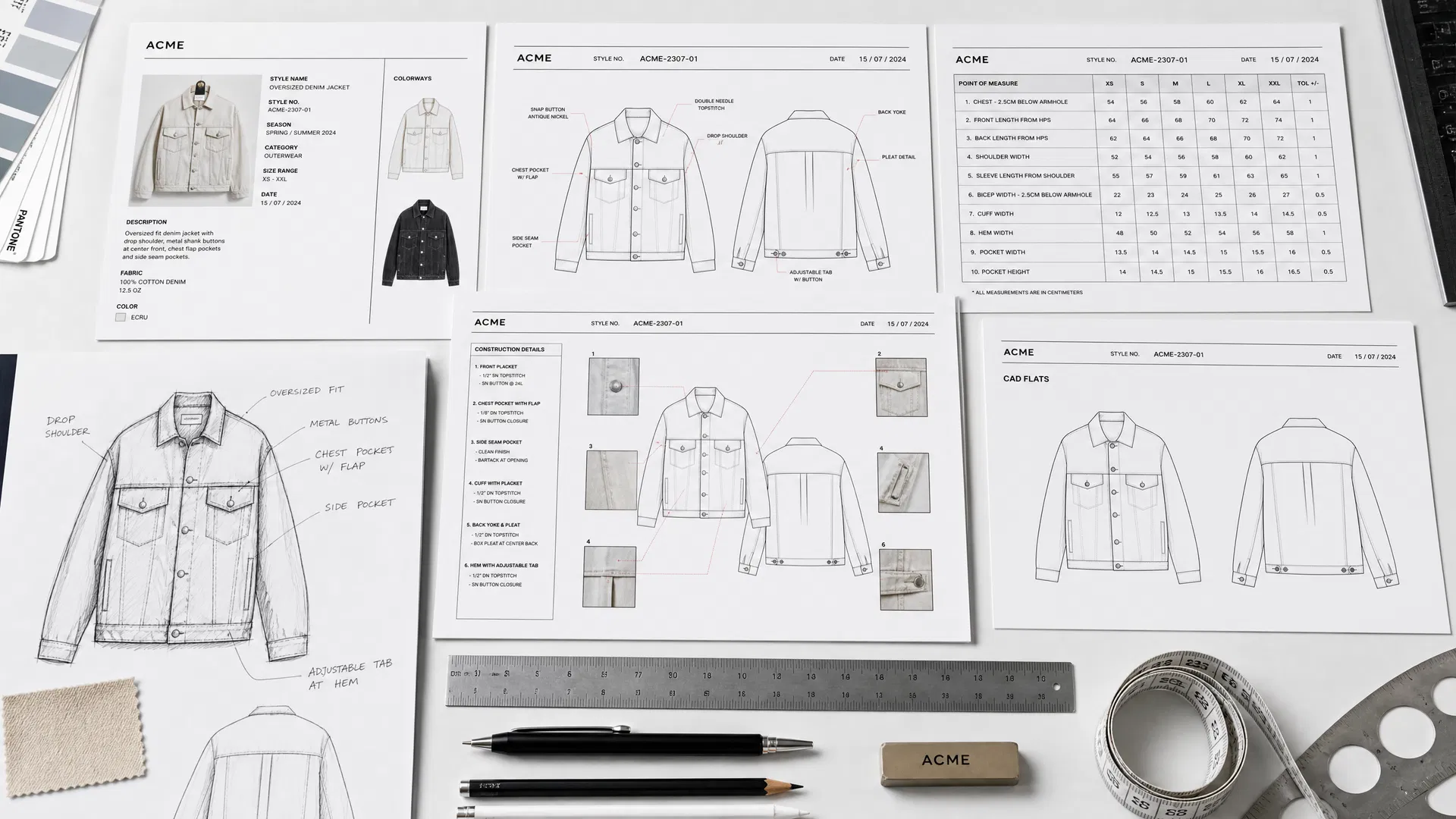
- Tech Pack mit Maßtabelle
- AQL-Stufe und Prüfkriterien
- Spezifische Mängelsorgen basierend auf früheren Bestellungen
- Verpackungs- und Etikettierungsspezifikationen
Chanddos dreistufiger QC-Prozess
Bei Chanddo Apparel durchläuft jede Bestellung alle drei Inspektionsstufen: Rohmaterialprüfung vor dem Zuschnitt, begleitende Prüfung während der Produktion und 100-%-Endinspektion vor dem Verpacken. Wir liefern für jede Bestellung einen QC-Bericht mit Fotos. Fehlerquoten von konstant unter 1 % über unsere Produktionschargen hinweg spiegeln die Disziplin unseres QC-Systems wider.
Für Marken, die ihre erste Bestellung bei uns aufgeben, begrüßen wir Drittanbieter-Inspektionen in jeder Phase. Kontaktieren Sie uns, um Ihre Qualitätsanforderungen zu besprechen, oder lesen Sie unseren Leitfaden darüber, wie Sie einen OEM-Bekleidungshersteller auswählen, um einen umfassenderen Rahmen zur Bewertung von Fabrikqualitätssystemen zu erhalten.