Die Stoffauswahl ist eine der folgenschwersten Entscheidungen in der Bekleidungsproduktion. Der richtige Stoff bestimmt, wie ein Kleidungsstück aussieht, sich anfühlt, sich verhält und im Laufe der Zeit trägt – und er macht 40–60 % der Gesamtkosten aus. Für Marken, die in China beschaffen, ist das Verständnis von Stoffkategorien, technischen Spezifikationen und Zertifizierungsstandards unerlässlich, um effektiv mit Ihrer Fabrik zu kommunizieren und sicherzustellen, dass das Endprodukt Ihren Qualitätsstandards entspricht.
Stoffkategorien verstehen: Gewebe, Maschenware (Knits) und Vliesstoffe (Non-Woven)
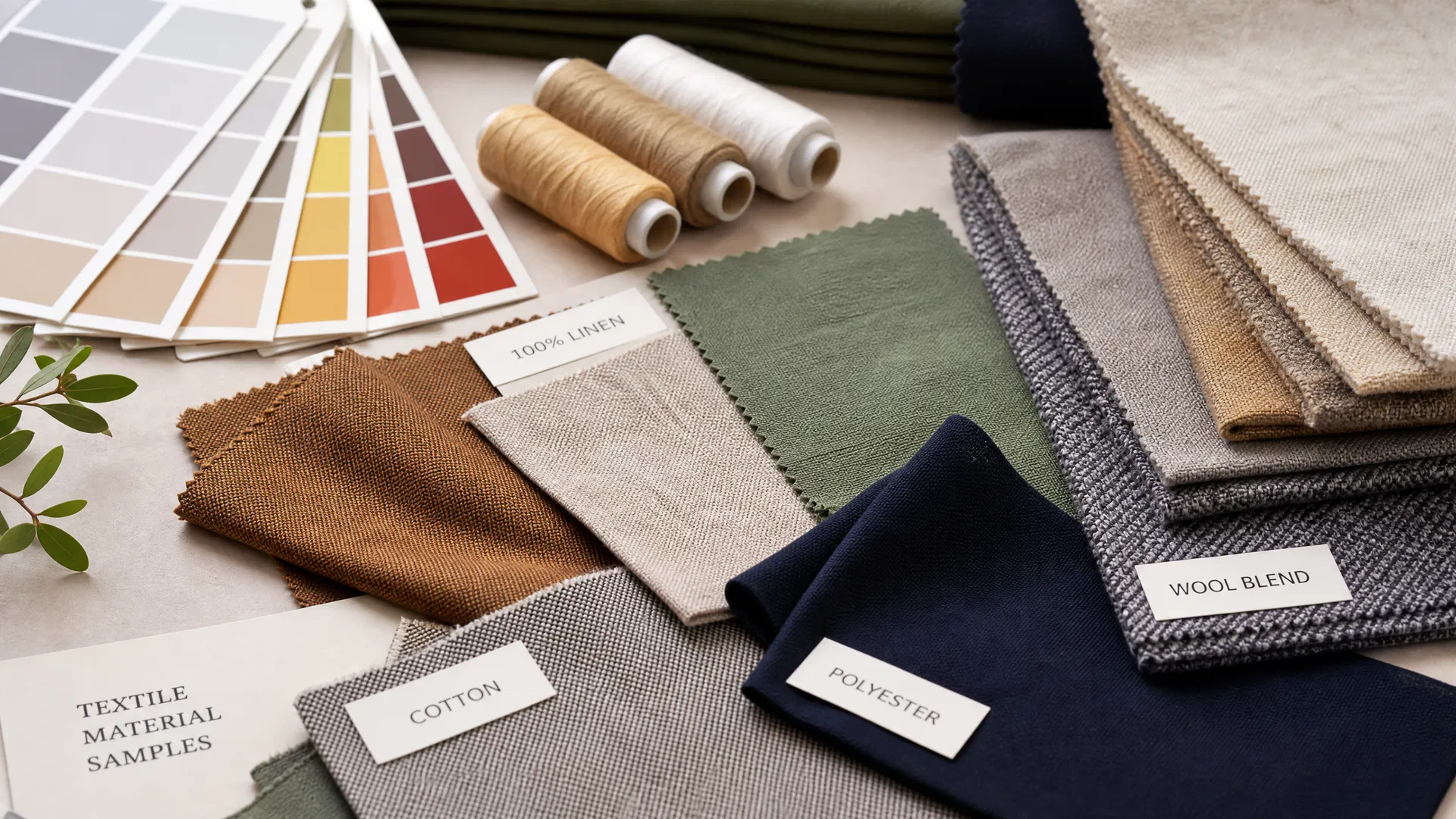
Alle Bekleidungsstoffe fallen in drei strukturelle Kategorien, die jeweils unterschiedliche Eigenschaften und geeignete Anwendungen aufweisen:
| Kategorie | Struktur | Haupteigenschaften | Typische Anwendungen |
|---|---|---|---|
| Gewebe (Woven) | Verflochtene Kett- und Schussfäden | Stabil, strukturiert, minimaler Stretch | Anzüge, Hemden, Hosen, Kleider |
| Maschenware / Strick (Knit) | Ineinandergreifende Garnschlaufen | Dehnbar, bequem, fällt gut | T-Shirts, Knitwear, Activewear, Freizeitkleider |
| Vliesstoffe (Non-Woven) | Verbundene Fasern (ohne Weben/Stricken) | Gleichmäßig, kostengünstig, begrenzte Haltbarkeit | Einlagen, Einwegkleidung |
Für die meisten Modemarken sind Gewebe und Maschenwaren von primärem Interesse. Die Wahl zwischen beiden wird weitgehend durch die beabsichtigte Silhouette und Funktion des Kleidungsstücks bestimmt: Strukturierte Kleidungsstücke (Blazer, maßgeschneiderte Hosen, formelle Kleider) erfordern Gewebe, während lässige und komfortorientierte Kleidungsstücke von Strickkonstruktionen profitieren.
Gängige Bekleidungsstoffe nach Kleidungsstücktyp
Verschiedene Kleidungsstückkategorien haben etablierte Stoffkonventionen, die Ästhetik, Leistung und Kosten in Einklang bringen:
| Kleidungsstücktyp | Gängige Stoffe | Typischer Fasergehalt |
|---|---|---|
| Maßanzüge / Blazer | Wollstoffe, Woll-Polyester-Mischung, Ponte | Wolle 50–100 %, Polyester 0–50 % |
| Kleider (formell) | Crêpe, Chiffon, Satin, Jacquard | Polyester, Seide, Viskose |
| Kleider (Freizeit) | Jersey, Ponte, Leinen, Baumwollpopeline | Baumwolle, Viskose, Polyestermischung |
| Hemden / Blusen | Popeline, Twill, Oxford, Chambray | Baumwolle 100 %, Baumwoll-Polyester-Mischung |
| Hosen (formell) | Wollstoffe, Gabardine, Twill | Wolle, Polyester, Baumwolle |
| Knitwear (Strickwaren) | Interlock, Rippe, Fleece, French Terry | Baumwolle, Polyester, Acryl, Wolle |
| Arbeitskleidung / Uniformen | Twill, Ripstop, Canvas | Baumwoll-Polyester-Mischung, Nylon |
Wichtigste technische Spezifikationen
GSM (Gramm pro Quadratmeter)
GSM misst das Stoffgewicht und ist eine der wichtigsten Spezifikationen, die in Ihrem Tech-Pack definiert werden müssen. Ein höherer GSM-Wert weist auf einen schwereren, substanzielleren Stoff hin; ein niedrigerer GSM-Wert weist auf einen leichteren, fluidigeren Griff hin. Allgemeine Richtwerte:
- Leicht (80–150 GSM): Chiffon, Voile, feiner Jersey – geeignet für Blusen, Sommerkleider
- Mitttelschwer (150–250 GSM): Popeline, Crêpe, Standard-Jersey – geeignet für die meisten Freizeit- und Business-Kleidungsstücke
- Schwer (250–400+ GSM): Denim, Canvas, schwerer Anzugstoff – geeignet für Outerwear, Arbeitskleidung, strukturiertes Schneiderhandwerk
Garnfeinheit (Yarn Count)
Die Garnfeinheit beschreibt die Feinheit des im Stoff verwendeten Garns. Im metrischen System (Nm) weisen höhere Zahlen auf feinere Garne hin. Im englischen Baumwollzählungssystem (Ne) weisen ebenfalls höhere Zahlen auf feinere Garne hin. Feinere Garne produzieren im Allgemeinen weichere, luxuriösere Stoffe, allerdings zu höheren Kosten.
Stoffbreite und Einlaufverhalten (Shrinkage)
Standard-Stoffbreiten betragen 57–60 Zoll (145–152 cm) für die meisten Gewebe und 60–72 Zoll für Maschenwaren. Die Einlauftoleranz (Shrinkage) muss bei der Schnittmustererstellung berücksichtigt werden – die meisten Baumwollstoffe schrumpfen beim ersten Waschen um 3–5 %, während Polyestermischungen um weniger als 1 % schrumpfen.
Stoffzertifizierungen
Für Marken, die in den USA und der EU verkaufen, werden Stoffzertifizierungen sowohl für die Compliance als auch für das Marketing zunehmend wichtig. Die wichtigsten zu verstehenden Zertifizierungen:
| Zertifizierung | Was sie abdeckt | Relevanz |
|---|---|---|
| OEKO-TEX Standard 100 | Prüfung auf Schadstoffe in allen Komponenten des Stoffes | Verbrauchersicherheit; von EU- und US-Händlern weitgehend anerkannt |
| GOTS (Global Organic Textile Standard) | Bio-Fasergehalt + soziale/ökologische Verarbeitungsstandards | Erforderlich für Bio-Marketingbehauptungen („Organic“) |
| BCI (Better Cotton Initiative) | Nachhaltige Baumwollanbaupraktiken | Berichterstattung zur Nachhaltigkeit der Lieferkette |
| GRS (Global Recycled Standard) | Recycelter Anteil im Stoff | Erforderlich für Recycling-Marketingbehauptungen |
| bluesign® | Ressourceneffizienz und chemische Sicherheit bei der Textilverarbeitung | Positionierung für Premium-Nachhaltigkeit |
OEKO-TEX Standard 100 ist für die meisten Marken der praktischste Ausgangspunkt – er testet auf über 100 Schadstoffe und wird von großen US- und EU-Einzelhändlern als grundlegender Sicherheitsstandard anerkannt. Ihre OEM-Fabrik kann OEKO-TEX-zertifizierte Stoffe typischerweise von ihren regulären Lieferanten beziehen.
Beschaffung aus China: Wichtige Textilzentren
Chinas Textilindustrie ist geografisch konzentriert, wobei sich verschiedene Regionen auf unterschiedliche Stoffkategorien spezialisieren:
- Shaoxing (Zhejiang): Der größte Webstoffmarkt der Welt. Spezialisiert auf Polyester-, Viskose- und Mischgewebe. Heimat der China Textile City, die über 30.000 Stoffanbieter beherbergt.
- Guangzhou (Guangdong): Stark bei Maschenwaren (Knits), Stretchstoffen und Spitze. Die Nähe zu den Bekleidungsfabriken in Shenzhen macht es zu einem natürlichen Partner der Lieferkette.
- Dalang (Dongguan): Chinas Zentrum für Strickwaren (Knitwear) und Wollstoffe. Spezialisiert auf Pulloverstrick, Wollmischungen und Acrylgarne.
- Keqiao (Shaoxing): Spezialisiert auf bedruckte Stoffe und On-Demand-Digitaldruck.
Wie OEM-Fabriken die Stoffbeschaffung handhaben
Einer der Hauptvorteile der Zusammenarbeit mit einer etablierten OEM-Fabrik besteht darin, dass diese die Stoffbeschaffung in Ihrem Auftrag übernimmt. Eine professionelle Fabrik verfügt über bestehende Beziehungen zu Stofflieferanten über mehrere Kategorien hinweg, wodurch sie Ihren spezifizierten Stoff schnell und zu wettbewerbsfähigen Preisen beschaffen kann.
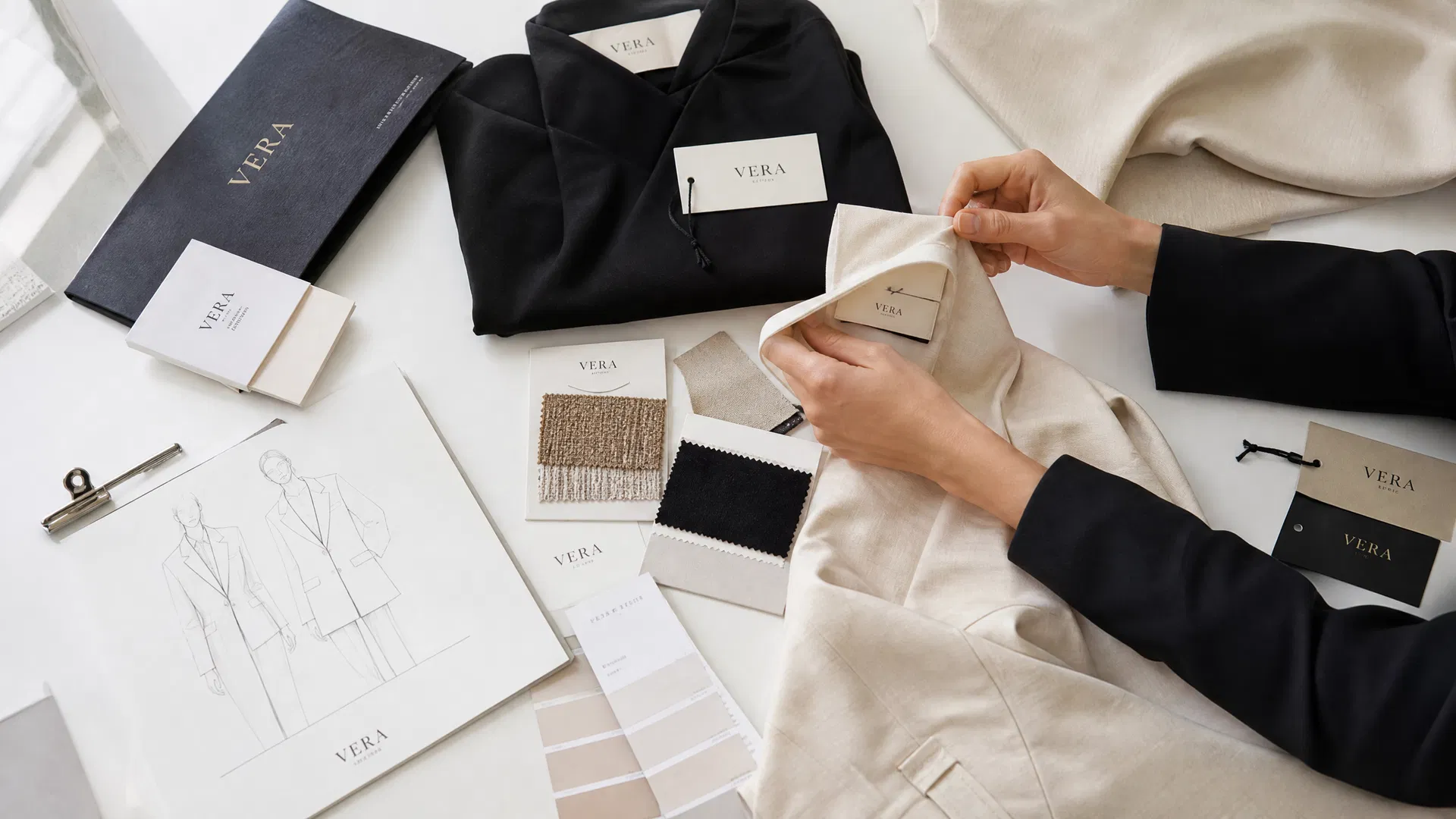
Der typische Ablauf: Sie spezifizieren den Stofftyp, das Gewicht, den Fasergehalt und eventuelle Zertifizierungsanforderungen in Ihrem Tech-Pack. Die Fabrik beschafft 2–3 Stoffmuster (Swatches), die Ihrer Spezifikation entsprechen, und sendet sie Ihnen vor Produktionsbeginn zur Genehmigung zu. Dies beseitigt die Komplexität der eigenständigen Beschaffungsverwaltung und stellt sicher, dass Sie Transparenz und Genehmigungsrecht über die verwendeten Materialien haben.
Ein umfassendes Verständnis darüber, wie Sie Stoffe in Ihren Produktionsdokumenten spezifizieren, finden Sie in unserem Leitfaden zur Erstellung eines Tech-Packs für die Bekleidungsherstellung.
Mindestbestellmengen für Stoffe (Fabric MOQs)
Stoffwebereien verlangen typischerweise Mindestbestellmengen von 1.000 bis 3.000 Yards (ca. 900 bis 2.700 Meter) pro Farbe. Für kleine Produktionsläufe kann Ihre OEM-Fabrik Stoff oft direkt ab Lager (vorgedfärbt, sofort verfügbar) beschaffen anstatt kundenspezifisch zu färben, was sowohl die MOQ als auch die Vorlaufzeit verkürzt. Die Verfügbarkeit von Lagerstoffen variiert je nach Saison und Kategorie – Ihre Fabrik kann Sie beraten, was derzeit verfügbar ist.
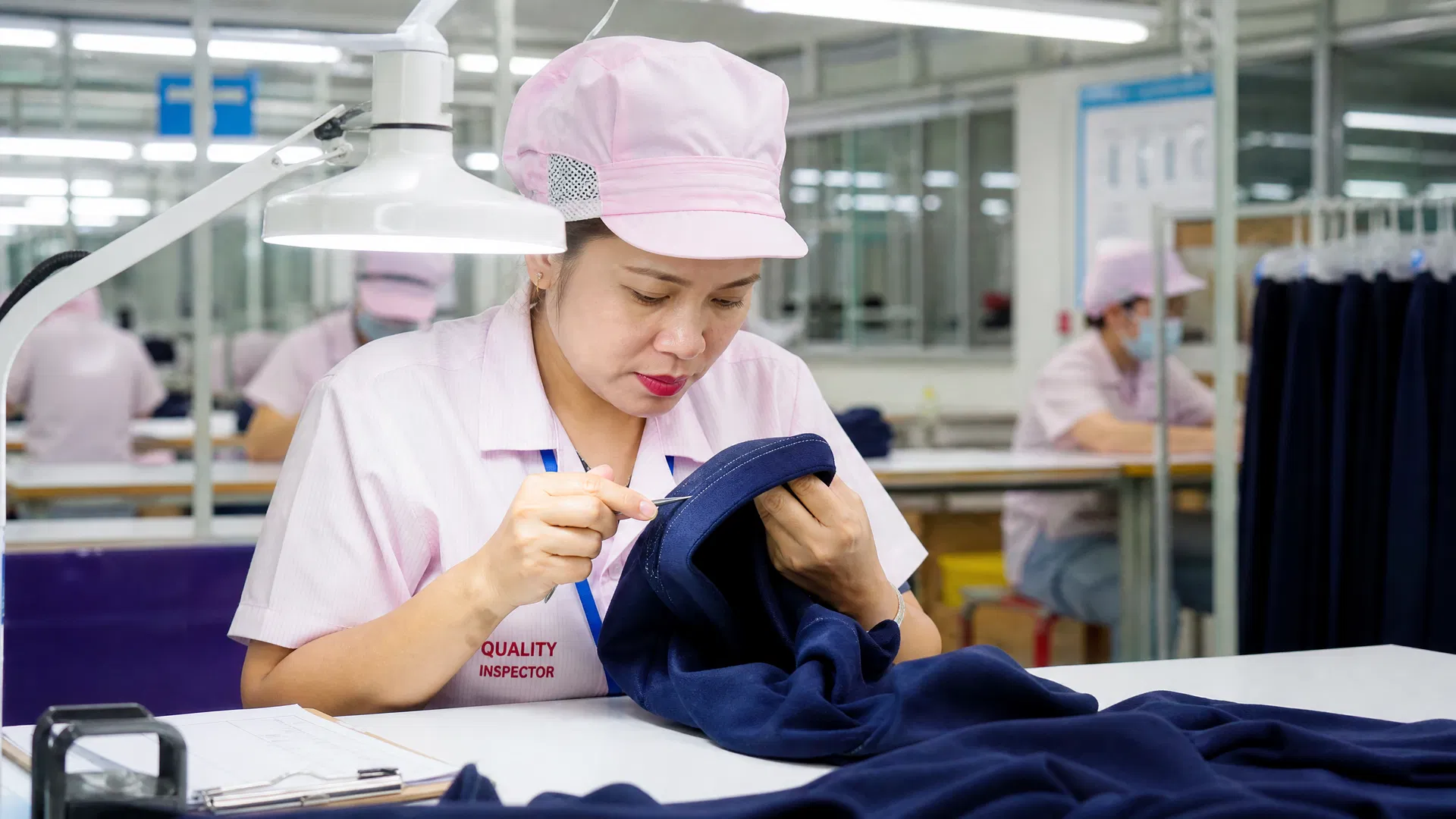
Stoffprüfung (Fabric Testing)
Vor Beginn der Großserienproduktion sollten wichtige Stoffprüfungen durchgeführt werden, um sicherzustellen, dass das Material Ihre Spezifikationen erfüllt:
- Farbechtheit (Colorfastness): Testet die Beständigkeit gegen Waschen, Reiben und Lichteinwirkung. Mindestnote 4 (auf einer Skala von 1–5) ist für die meisten Anwendungen Standard.
- Pilling-Verhalten: Besonders wichtig für Strickwaren und Fleece-Stoffe. Note 3–4 ist für die meisten Verwendungszwecke akzeptabel.
- Einlaufverhalten (Shrinkage): Waschen und Messen des Stoffes vor dem Zuschneiden, um zu bestätigen, dass das Einlaufen innerhalb der Toleranz liegt.
- Zug- und Reißfestigkeit: Kritisch für Arbeitskleidung und Performance-Bekleidung.
Nachhaltige Stofftrends für 2026
Nachhaltigkeit ist für Verbraucher in den USA und der EU zunehmend ein Kaufkriterium, und Marken, die ihre Materialauswahl glaubwürdig kommunizieren können, verschaffen sich einen spürbaren Wettbewerbsvorteil. Wichtige Trends für 2026:
- Recyceltes Polyester (rPET): Hergestellt aus Post-Consumer-Plastikflaschen. GRS-zertifiziertes rPET ist von chinesischen Webereien gegen einen geringen Aufpreis gegenüber herkömmlichem Polyester weit verbreitet.
- Tencel / Lyocell: Aus Holz Zellstoff gewonnene Faser mit einem geschlossenen Produktionskreislauf. Hervorragender Fall und weicher Griff; geeignet für Kleider und Blusen.
- Bio-Baumwolle (Organic Cotton): GOTS-zertifizierte Bio-Baumwolle erzielt einen Aufschlag von 20–40 % gegenüber konventioneller Baumwolle, unterstützt jedoch eine Premium-Markenpositionierung.
- Leinen und Leinenmischungen: Verzeichnen ein starkes Nachfragewachstum, da Verbraucher nach natürlichen, atmungsaktiven Stoffen suchen.
Chanddo übernimmt die Stoffbeschaffung von A bis Z
Bei Chanddo Apparel ist die Stoffbeschaffung in unserem OEM- und ODM-Service enthalten. Wir beziehen von zertifizierten Lieferanten in ganz Guangdong und Zhejiang und haben Zugang zu OEKO-TEX-, GOTS- und GRS-zertifizierten Materialien. Wir senden Ihnen vor Produktionsbeginn Stoffmuster zur Freigabe zu und können auf Anfrage unabhängige Materialprüfungen (Third-Party Testing) organisieren.
Kontaktieren Sie uns, um Ihre Stoffanforderungen zu besprechen – oder erkunden Sie unsere Kompetenzen in der Kleiderproduktion und Strickwarenproduktion, um zu sehen, wie wir diese Stoffstandards in der Praxis anwenden.